Bridging Loans
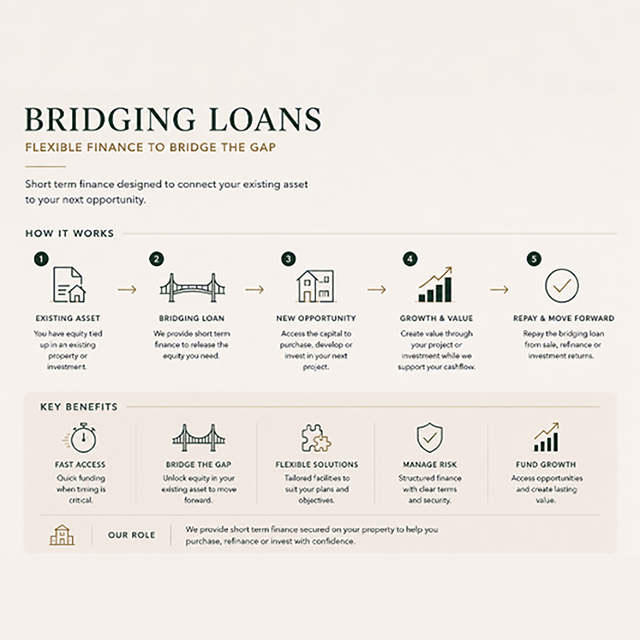
Fast, short-term funding designed to bridge gaps until long-term finance is secured. Ideal for time-sensitive opportunities like auctions, refinancing after development, or releasing capital during a project.
Closed bridging loan
A closed bridging loan is a short-term funding solution with a fixed repayment date, typically linked to a confirmed property sale. This provides greater certainty and control over your timeline.
With a clear exit strategy in place, closed bridging loans often benefit from lower interest rates than open facilities, making them a more cost-effective option. Ideal for time-sensitive transactions, they allow you to act quickly while maintaining financial confidence.
Open bridging loan
An open bridging loan is a short-term, interest-only funding solution with no fixed repayment date, designed to give you maximum flexibility when timing is uncertain – such as purchasing a property before securing a sale.
While typically carrying higher interest rates than closed bridging loans, it offers the ability to act quickly on opportunities without a confirmed exit in place. Repayment is usually expected within a defined short-term period, making it well-suited for borrowers who need fast access to capital while finalising their longer-term strategy.

First charge bridging loan
A first charge bridging loan is a short-term funding solution secured against a property you own outright, giving the lender primary security over the asset. This reduced risk profile typically allows for more competitive interest rates.
Commonly used for property acquisitions, refurbishments or business funding, first charge bridging loans provide fast, efficient access to capital. They are an ideal option for borrowers seeking cost-effective, short-term finance with a straightforward security structure.
Second charge bridging loan
A second charge bridging loan is a short-term funding solution secured against a property that already has an exisiting mortgage or loan in place. In this structure, the primary lender holds first charge, while the bridging lender takes a secondary position.
Due to the increased risk, these loans typically carry higher interest rates. However, they offer a flexible and efficient way to release equity without disturbing your current mortgage - making them ideal for borrowers who need fast access to capital for time-sensitive opportunities.
Some forms of Bridging Loans are not regulated by the Financial Conduct Authority.